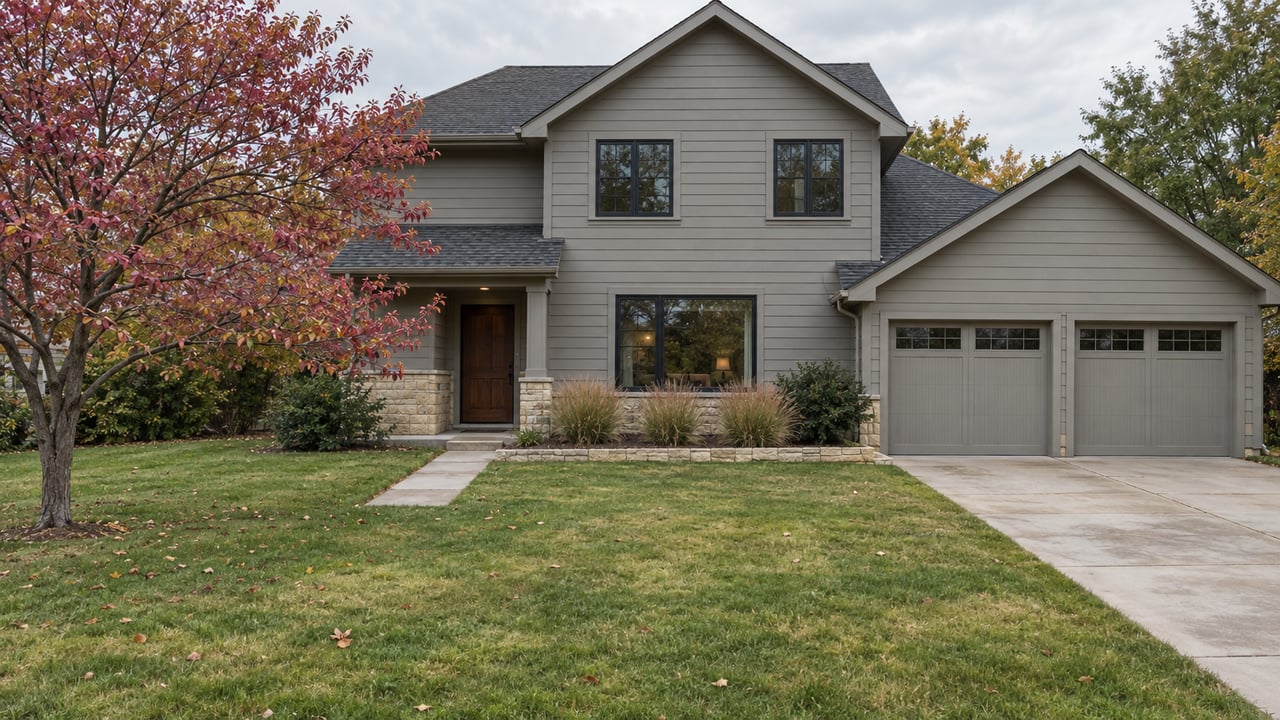
Lowell, IN Home Prices Are Up Eight Percent. Not Every Home Got the Memo.
October 1, 2026
October 1, 2026
Search for Lowell home prices and one site tells you values are up eight percent over the past year. Check another and the number is barely two percent. Neither site made an error. They are measuring two different things, and the gap between them tells you more about how Lowell is actually growing than either number does on its own.
Zillow's Home Value Index, which tracks the estimated value of every home in town whether or not it sold, put Lowell's average home value at $339,038 as of its July 31, 2026 update, up 2.2% over the year. Redfin, which only counts homes that actually closed, showed a median sale price of $346,000 for the three months ending April 2026, up 5.3% over the same window a year earlier, with the price per square foot climbing 5.0% to $177. Homes.com's trailing twelve-month figure ran higher still, putting the median sale price at $352,300, an 8% increase, and a separate snapshot from the same portal later in the year pushed that trailing figure to $354,368, an 11% jump.
None of these numbers are competing for the same title. One measures what the town's housing stock is worth on paper. The others measure what buyers actually paid for whatever happened to close during a given window. When those two figures pull apart this much, it usually means the homes selling right now don't look like the homes that make up most of the town.
In Lowell, that's exactly what's happening.
A large share of what's closing in Lowell right now isn't existing housing stock changing hands. It's brand new construction, priced and built to a different standard than what's already on the ground.
Stone Mill, developed by Providence Homes, is doing a lot of that work. The community's townhomes start at $256,995 for 2 to 3 bedroom layouts around 1,600 square feet, built with 9-foot ceilings and quartz countertops as standard finishes. A second phase, Stone Mill Signature, offers custom ranch and two-story plans from $335,995, ranging from just over 2,000 square feet up to nearly 3,000, in the Tri-Creek School Corporation district. Both products were still in active pre-sale or under-construction phases as of this year, which means every closing adds a new, higher-priced data point to the town's sales median.
A few miles closer to Crown Point, Graythorne Subdivision is doing something similar at a different price tier. It's a gated community of fully custom homes on wooded lots ranging from three-quarters of an acre to well over an acre, marketed as a rural, natural setting for buyers who want acreage without leaving easy reach of I-65. Spring Run, a newer subdivision on the other side of town, has also been turning over nearly-new construction on cul-de-sac lots.
None of this is unusual for a growing town. New subdivisions almost always sell at a premium to the existing stock around them, because they're new. What matters for anyone reading a townwide median is that when a meaningful share of the homes closing in a given quarter are coming out of Stone Mill or Graythorne, the median moves even if not a single existing homeowner's equity changed.
Cedar Creek Township, which by the local Clerk-Treasurer's own description is made up of three areas, Lake Dalecarlia, Shelby, and the Lowell area itself, carries the town's older housing stock. It's a mix of newer construction near town blended with early to mid-century homes around the lake.
Over the trailing twelve months, the median sale price for homes in Cedar Creek came in at $323,040, down 2% from the prior twelve-month period. Homes there also took longer to move, averaging 58 days on market compared to a 55-day national average.
Put the two numbers side by side. Stone Mill's entry-level townhomes start close to $257,000 and its custom homes start north of $335,000. Cedar Creek's established stock is transacting at a median of $323,040 and trending down slightly. These aren't competing products chasing the same buyer. One is new square footage with a builder's warranty. The other is decades-old housing that happens to sit in the same zip code.
A townwide median doesn't know the difference. It just averages them together and reports whatever number falls out.
Inside Cedar Creek, Lake Dalecarlia is its own small world. The lake itself covers roughly 180 acres with an average depth of about four feet, ringed by a mix of full-time residences and vacation homes. It's a genuinely thin market. At any given time there are typically only around 10 lake homes and 10 vacant lots listed across the entire community. A recent snapshot showed just three waterfront homes for sale, with a median asking price of $339,000, most sitting on the market for about 35 days, and only two sales closing in the prior month.
When a market is that small, one or two closings can swing the median more than an entire quarter of Stone Mill sales could swing Lowell's townwide number. A buyer comparing Lake Dalecarlia's reported median to Stone Mill's builder pricing isn't looking at two competing options in the same market. They're looking at a deep, active new-construction pipeline on one side and a handful of legacy lake properties that turn over rarely on the other.
If you're comparing Lowell's median price against St. John, Crown Point, or Cedar Lake using whatever number a portal hands you, ask a follow-up question before you draw a conclusion: which part of Lowell is that number actually describing?
If you're looking at new construction, Stone Mill and Graythorne pricing will track closely with whatever median sale price is being quoted, because those closings are a real part of what's driving it up. If you're looking at an existing home in an established neighborhood, the more useful benchmark is closer to Cedar Creek's trailing figures, which have been flat to slightly down, not the double-digit growth headline.
None of this means Lowell isn't growing. Northwest Indiana Business Magazine described the town as no longer as sleepy as it used to be, pointing to a historic downtown with real turnover and a wave of new investment nearby. It does mean the growth is uneven, concentrated in specific subdivisions rather than spread evenly across every existing home in town. A buyer who treats the townwide median as a stand-in for what their specific target property is worth is comparing against the wrong slice of the market.
The fix isn't complicated. Ask for comps drawn from the actual subdivision or micro-market you're considering, not the town as a whole. A resale in Cedar Creek and a new build in Stone Mill can sit ten minutes apart and still belong to two different pricing conversations entirely.
If you're weighing a purchase in Lowell and want to know which of these categories your target property actually falls into, The Ruvoli Group can pull comps by subdivision rather than by zip code, so the number you're working from actually reflects the home you're looking at.
Stay up to date on the latest real estate trends.

I have specific knowledge of creating go-to-market strategies that will get your home seen and sold. Customer service is our highest priority! We are here to help you every step of the way in your buying or selling experience.
Get In Touch With Our Team To Learn More

855 E NORTH ST CROWN POINT IN 46307