Selling an Acreage Home Near Lowell: Key Seller Steps
May 21, 2026
May 21, 2026
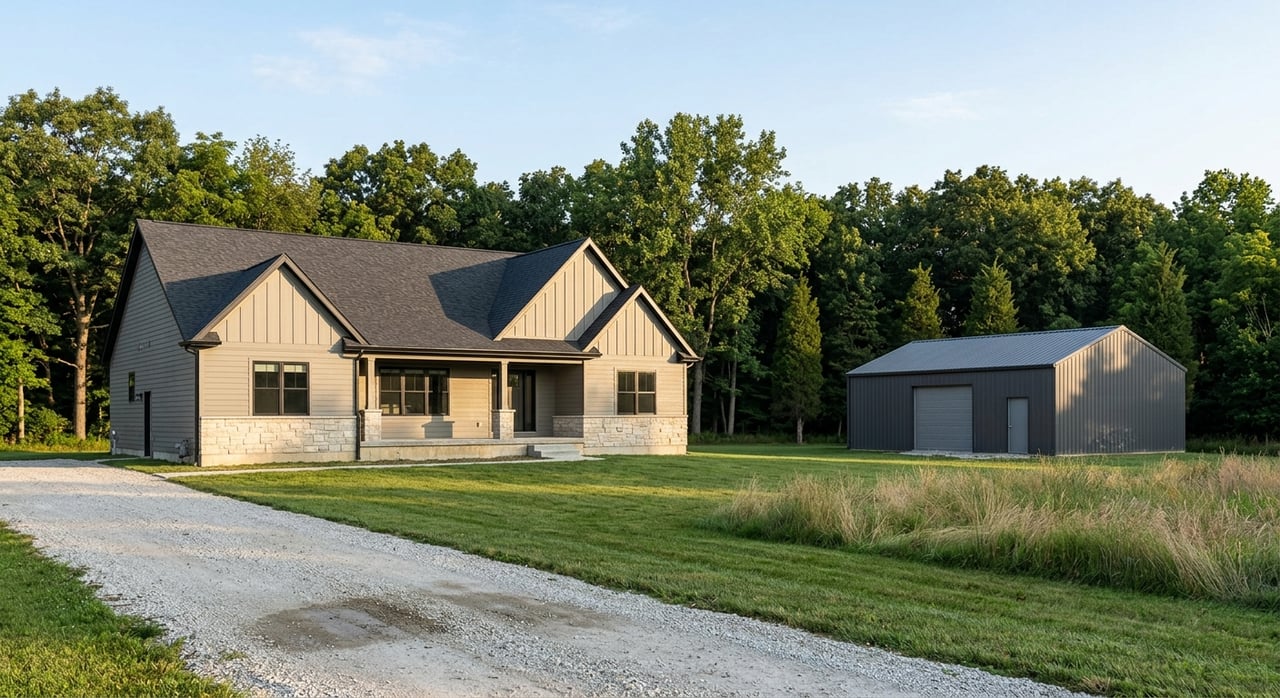
If you are selling a home on acreage near Lowell, you are not just selling a house. You are selling land, access, outbuildings, and a specific use story that buyers need to understand. That can feel like a lot to sort through, especially when zoning and property details can change how your home is priced and marketed. This guide will help you focus on what matters most before you list, so you can make smarter decisions from the start. Let’s dive in.
One of the first things you need to confirm is whether your property is inside the Town of Lowell or in unincorporated Lake County. That matters because they follow different zoning rules, permit standards, and land-use definitions. A home just outside town may look similar to one in Lowell, but the rulebook can be very different.
In Lowell, the AG district is intended for agricultural use and requires a 10-acre minimum lot area. In unincorporated Lake County, traditional farms require 20 contiguous acres, while hobby farms require 2.5 contiguous acres. That means a property with a few acres may support a rural-residential or hobby-farm angle, but not a traditional-farm one.
This is why acreage listings need precision. If your marketing describes the property in a way that zoning does not support, you may attract the wrong buyers and create confusion later. Clear positioning from the beginning helps your listing stand out for the right reasons.
Acreage homes often get grouped together too broadly, even when they should not be. A parcel in Lowell, a parcel near Gary, and a parcel elsewhere in Lake County can sit in very different pricing environments. Realtor.com market data in the research report shows Lowell’s median listing price at $364,202, while Gary’s median listing price is much lower at $135,000.
That gap is a reminder that county-wide comparisons can be misleading. For homes on land, the best comps are usually the ones that are physically similar and subject to similar zoning. Looking only at broad county averages can distort value instead of clarifying it.
A home on acreage should not be priced like a standard subdivision property. Buyers are evaluating more than square footage and bedroom count. They are also looking at usable land, layout, access, outbuildings, and what the parcel may support under current rules.
Indiana’s Department of Local Government Finance says sales disclosure data can be searched by county or address and is used to compare similar properties and determine fair selling prices. The same instructions note that the county assessor verifies acreage, land assessed value, improvement assessed value, tax district, and physical changes since assessment. That makes public record accuracy especially important when your property includes land beyond a typical homesite.
Before setting a price, it helps to verify:
This last point matters. Indiana sales disclosure instructions say a separate sales disclosure form is generally required for each parcel unless parcels are contiguous and in the same taxing district. If your property sale includes multiple parcels, that can affect both pricing strategy and transaction prep.
The Lake County Assessor is the official starting point for parcel records and GIS map requests. For acreage homes, that can help verify boundaries and acreage before a listing goes live. When buyers are comparing options, small differences in road frontage, parcel shape, or usable area can have a real impact.
If your property has an agricultural or recreational angle, broader land-value reports can offer context, but they are not direct comps. Purdue’s 2025 statewide survey found average values of $14,826 per acre for top-quality Indiana farmland, $12,254 for average-quality farmland, $9,761 for poor-quality farmland, $29,043 for land transitioning out of agriculture, and $9,542 for recreational land. Purdue also cautions that any specific property requires more information and local expertise.
The takeaway is simple: your price should be built from sold properties with similar acreage, zoning, access, and improvements, not from nearby subdivision homes alone.
With acreage properties, barns, pole barns, detached garages, sheds, and similar structures are part of the product. Buyers want to know what is there, how it is positioned, and whether it appears to fit current local rules. The more clearly you present those details, the easier it is for buyers to understand the value.
In Lowell’s AG district, permitted uses include pasture, livestock, crop production, farm implement storage, and single-family dwellings. Barns and similar agricultural buildings on agricultural property are treated differently from ordinary residential sheds. That distinction matters because buyers may assume every outbuilding functions the same way when it does not.
Lowell’s accessory-structure permit guidance says a detached garage or other accessory structure requires a building permit, must comply with setbacks, must be at least 10 feet from the main building, cannot sit on an easement, and should be shown on a survey. In Lowell residential districts, accessory structures may also be more limited than buyers expect.
For example:
In unincorporated Lake County, the rules can look different. Detached accessory garages and storage buildings on AG- and R-zoned lots generally must be in the rear yard or far back from the road. On properties over 1 acre, there is no maximum number, and on properties over 10 acres, maximum floor area is unlimited, subject to height limits.
When someone shops for a home on land, they usually want quick answers to a few practical questions. They want to know how much land is actually usable, where the structures sit, and how the property functions day to day. If that information is vague, buyers may hesitate.
Your listing should make these points easy to grasp:
That level of detail can save time and reduce confusion before showings even begin.
Strong marketing for an acreage home does more than make the property look attractive. It helps buyers understand how the land is laid out and how the property works. That is especially important near Lowell, where setbacks, easements, road frontage, and accessory-structure placement can affect how a buyer sees the opportunity.
This is where professional presentation can make a major difference. Aerial photography and wide ground shots can show the relationship between the home, driveway, outbuildings, and open land much better than standard listing photos alone. For acreage properties, that visual context is often part of the value.
At The Ruvoli Group, this is where a marketing-first approach becomes especially useful. Professional photography, video tours, and strong listing presentation can help buyers understand not just what the home looks like, but what the land offers.
A pretty photo is helpful, but acreage buyers usually need more than curb appeal. They want to see what is lawn, what is wooded, what may be pasture or tillable ground, and what areas are already improved. Clear visuals and descriptions can help serious buyers decide whether the property fits their needs before they schedule a visit.
If the property is best described as a hobby-farm setting, that description should match the zoning. In unincorporated Lake County, hobby farms require at least 2.5 contiguous acres and are restricted in most subdivisions unless most platted lots are 4.5 acres or larger. Using accurate language helps protect your credibility and keeps expectations realistic.
Acreage sales usually go more smoothly when sellers gather documents early. Waiting until a buyer asks questions can slow down momentum and create unnecessary stress. A little preparation upfront can make your listing stronger and your disclosures more accurate.
Indiana generally requires sellers of one- to four-unit residential property to complete the Residential Real Estate Sales Disclosure form before an offer is accepted. The form covers items that matter a lot for acreage properties, including septic and well systems, encroachments, zoning violations, nonconforming use, floodplain status, and access.
For many sellers, the most helpful pre-listing documents include:
These records support both pricing and marketing. They can also help answer buyer questions quickly, which can build confidence during the sale process.
Before your acreage home hits the market, make sure you have confirmed:
That kind of prep does not just reduce surprises. It also helps your agent create a more accurate, compelling listing from day one.
The current Lowell-area market appears moderately active, but buyers are still paying attention to price and property details. Zillow data in the research report shows Lowell’s average home value at $331,361, with homes pending in about 37 days. Realtor.com reports Lowell’s median listing price at $364,202, Lake County median days on market at 41 days, inventory up 5.88% year over year, and homes selling for about 1.13% below asking on average in March 2026.
For acreage sellers, that means strategy matters. You may not want to rely on broad optimism or assume buyers will fill in the blanks on their own. The better path is to price carefully, explain the property clearly, and market the land as intentionally as you market the house.
That is often what separates a listing that gets attention from one that sits. When buyers can quickly understand zoning, use, access, and improvements, they are more likely to engage with confidence.
If you are thinking about selling a home on acreage near Lowell, the right plan can make a big difference. From pricing and positioning to photography and listing strategy, The Ruvoli Group can help you present your property clearly and professionally.
Stay up to date on the latest real estate trends.



I have specific knowledge of creating go-to-market strategies that will get your home seen and sold. Customer service is our highest priority! We are here to help you every step of the way in your buying or selling experience.
Get In Touch With Our Team To Learn More

855 E NORTH ST CROWN POINT IN 46307