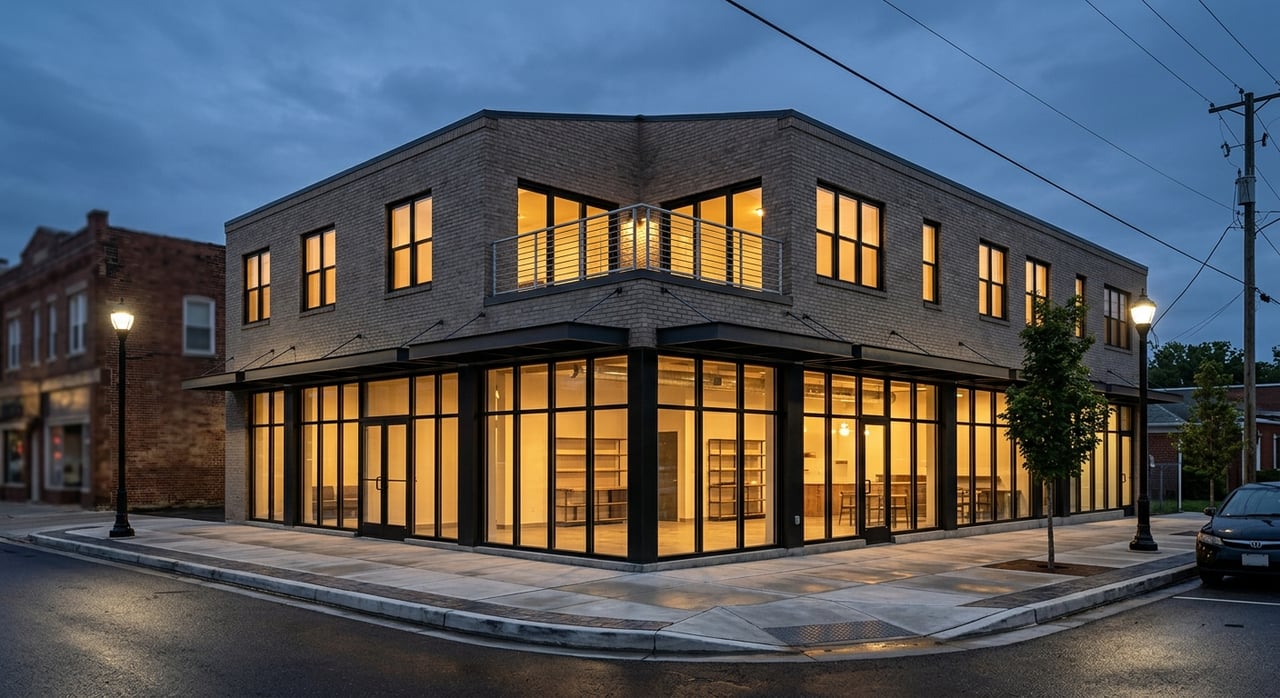
Valparaiso Commercial Real Estate & Mixed-Use Opportunities
April 16, 2026
April 16, 2026
Looking at small commercial or mixed-use property in Valparaiso can feel exciting and a little tricky at the same time. You may see a charming downtown storefront, a corridor property with easy access, or a building with apartments above retail and wonder which one actually fits your goals. The good news is that Valparaiso offers a real mix of options, and the local numbers give you a practical way to evaluate them. Let’s break down what small commercial and mixed-use opportunities in Valparaiso can look like and what to watch before you make a move.
Valparaiso is not a major metro, but it has a meaningful local business base and consumer economy. The city’s estimated population reached 35,065 in 2024, while Porter County reached 175,860, and median household income was $69,872 in Valparaiso and $87,972 in Porter County, according to U.S. Census QuickFacts. Those numbers matter because they help frame local spending power, business activity, and tenant demand.
The retail base is also notable for a city of this size. Valparaiso recorded $1.38 billion in total retail sales in 2022, while Porter County recorded $3.13 billion. Porter County also had 3,734 employer establishments in 2023, which supports a steady mix of service, retail, office, and small business users.
It also helps that downtown Valparaiso is part of the city’s planning vision. According to the Valparaiso comprehensive plan summary, downtown is treated as a key part of the city’s identity, lifestyle, and commerce, and the local development framework supports mixed-use development, live-work townhomes, and shared parking. For buyers and investors, that signals long-term public support for this style of property.
One of the most appealing parts of the Valparaiso market is variety. You are not limited to one format or one business model. Instead, you can find smaller downtown spaces, office and service properties along major roads, and mixed-use buildings that combine residential and commercial income.
Downtown Valparaiso tends to offer smaller-format spaces that may work well for retail, office, boutique service businesses, or owner-users. Public examples include spaces at 206 Lincolnway with 1,600 square feet, 222 Lincolnway with 1,286 square feet, and 410 Lincolnway with 2,924 square feet plus apartments above.
A strong current example is The Linc project, a city-backed mixed-use development with 127 residential units and 8 commercial units across three buildings. Its commercial bays are marketed from about 502 to 1,020+ square feet, which shows there is real inventory for smaller users who want a downtown location.
Outside the downtown core, the product mix often shifts toward convenience, visibility, and parking. Public listing examples include 2600 Roosevelt Road, marketed for office, retail, and medical users, as well as 808 Vale Park Road, a 13,608-square-foot bank building, and 2805 Calumet Avenue, a 510-square-foot drive-thru coffee asset.
These properties may appeal to buyers looking for uses that benefit from drive-by traffic, easier customer access, or specialized layouts. Depending on the building, the likely tenant mix can include medical, salon, daycare, banking, pet grooming, office, restaurant, and other service-based users.
Mixed-use is often where Valparaiso gets especially interesting. Properties like 410 Lincolnway and 554 Locust Street show the classic model of commercial space on the main level with residential income above. That setup can create more than one income stream and reduce reliance on a single tenant type.
For some buyers, that can be a practical balance. If one storefront takes time to lease, apartment income may help support the property. At the same time, mixed-use buildings usually require closer attention to parking, insurance, buildout needs, and how different tenants function in the same structure.
If you are new to small commercial real estate, one of the biggest learning curves is lease structure. The rent number on a listing only tells part of the story. Your actual income or occupancy cost often depends on how expenses are divided between landlord and tenant.
According to Latitude Commercial’s annual market report, the three basic structures to know are:
This matters in Porter County because average NNN expense components were reported at about:
That is why experienced buyers look at full occupancy cost, not just base rent.
Valparaiso listings show these structures in action. 222 Lincolnway was advertised at $22 per square foot on a modified gross basis for a 1,286-square-foot retail space. At 2600 Roosevelt Road, the modified gross setup includes tenant responsibility for utilities, a pro rata share of real estate taxes and insurance, and snow removal.
At The Linc, the downtown commercial bays are quoted at $35 per square foot base rent plus $7 per square foot NNN, with a minimum 5-year term. Meanwhile, at 410 Lincolnway, the landlord pays heat, water, sewer, and trash, while tenants pay other utilities. These examples show why two spaces with similar asking rents can produce very different real-world costs.
Whether you plan to occupy the space yourself or lease it out, the same core question applies: does the income justify the price and risk? One common way to measure that is cap rate, which Latitude defines as net operating income divided by asset value.
Local examples help illustrate the range. 808 Vale Park Road was marketed as a fully leased retail bank property at a 5% cap rate. 2805 Calumet Avenue was marketed at a 6% cap rate with a 15-year initial lease and 10% rent increases every 5 years.
Those examples suggest a clear pattern. Buyers tend to pay more for properties with stronger tenant credit, longer lease terms, and cleaner expense structures. If you are comparing opportunities, those factors can matter just as much as the building itself.
It is important not to treat every nearby market as interchangeable. Gary and Valparaiso serve different economic profiles, and that can affect tenant demand, rents, and investment risk.
The same Census QuickFacts data shows Gary’s 2024 estimated population at 67,555, with median household income of $38,731 and a poverty rate of 33.1%. That does not make one market better in a universal sense, but it does mean buyers should underwrite each area differently based on likely tenant mix, credit quality, and leasing strategy.
For a small investor or owner-user focused on Valparaiso, the key takeaway is simple: local demographics, spending patterns, and planning support are part of the reason this submarket often stands apart.
Valparaiso does not operate in a vacuum, so it helps to look at the wider Northwest Indiana backdrop. Latitude’s 2024 market data reported that retail vacancy reached a four-year low of 3.74% in the third quarter. Retail asking rents ended the year at $17.46 per square foot, while retail sale prices peaked at just under $200 per square foot.
The office market was steadier, with vacancy around 5% and asking rents rising from $19.54 to $19.70 per square foot. Office sales were typically taking 6 to 9 months, while retail months on market ended around 7.75 months. At the same time, investment sales volume cooled during the year, which points to a buyer pool that is still active but more selective.
That is often the kind of market where preparation matters most. Well-located, well-understood properties can still attract attention, but buyers usually need a sharper plan and cleaner underwriting than they did in a more aggressive cycle.
Before you pursue a small commercial or mixed-use property in Valparaiso, it helps to narrow your decision around a few practical questions:
These questions can help you avoid focusing too much on price per square foot alone. In many small commercial deals, the better opportunity is the one with clearer economics and fewer surprises.
Small commercial and mixed-use properties are rarely one-size-fits-all. A downtown storefront, a live-work setup, and a corridor building can all make sense, but only if they match your budget, risk tolerance, and business or investment plan.
That is where local guidance can make a real difference. A broker who understands Valparaiso’s downtown framework, corridor patterns, and Northwest Indiana lease norms can help you compare options more clearly and spot issues early. If you are exploring small commercial or mixed-use opportunities in Valparaiso, connect with The Ruvoli Group for personalized guidance on finding the right fit in Northwest Indiana.
Stay up to date on the latest real estate trends.

I have specific knowledge of creating go-to-market strategies that will get your home seen and sold. Customer service is our highest priority! We are here to help you every step of the way in your buying or selling experience.
Get In Touch With Our Team To Learn More

855 E NORTH ST CROWN POINT IN 46307